The Daily Brief
Missiles Cancel 'Davos in the Desert': Saudi Postpones FII to 2027 as Houthi Strikes Rattle the Kingdom
The Future Investment Initiative — Riyadh's answer to Davos — won't happen this year. A missile through King Khalid Airport saw to that. Why the original Davos, 55 years in, is still the one meeting war can't cancel, and the state of play across the Middle East.
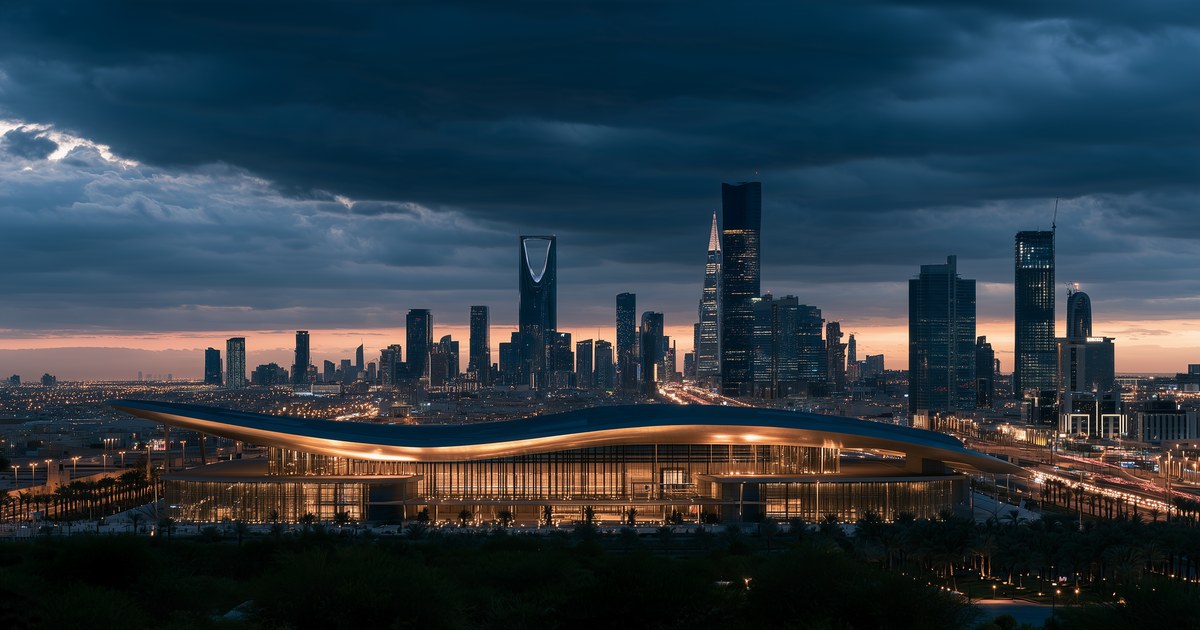
The desert Davos is off#
Saudi Arabia has postponed the Future Investment Initiative — the "Davos in the Desert" — from October 26–29, 2026 to 2027. The tenth edition, themed "The Power of Legacy," will have to wait for safer skies.
The reason isn't diplomatic. It's ballistic. On October 10, a Houthi missile struck Riyadh's King Khalid International Airport, killing 12 to 18 people and injuring more than 300. Days earlier, Houthi strikes hit Abha airport; by October 13, drones and missiles had set part of Aramco's headquarters ablaze. A projectile struck the southern city of Najran on Sunday, injuring six more.
FII Institute CEO Princess Maha bint Mishari Al Saud framed it as quality control: the milestone tenth edition must deliver "the full scale, quality and impact" partners expect. The Wall Street version is blunter — per the Journal, bankers at JPMorgan and Citigroup were already canceling meetings, and teams around Jamie Dimon and Jane Fraser were debating whether their CEOs should fly into a war zone. When your airport is the target, the conference is the casualty.
The money at stake#
FII isn't just a conference. Launched in 2017 with backing from the Public Investment Fund, it is the shop window of Vision 2030 — Crown Prince Mohammed bin Salman's plan to turn the oil exporter into a hub for finance, tourism, and tech. NEOM itself was unveiled at the first FII.
The speaker list for this year tells you what was lost: Dimon, Fraser, Goldman Sachs' David Solomon, BlackRock's Larry Fink, Blackstone's Stephen Schwarzman, Standard Chartered's Bill Winters. These are the people MBS needs to fund the diversification. Now the 2026 deal calendar has a hole in it — and per the Journal, mounting war costs are already straining the kingdom's finances. Postponing the flagship investor gathering is the opposite of the signal Vision 2030 needs.
Why the real Davos is still top G#
Here's the contrast the kingdom can't buy its way out of. The World Economic Forum has met in Davos, Switzerland, since 1971 — 55 years of war, oil shocks, financial crises, terror waves, and a pandemic. It has never been cancelled because someone started shooting.
That's the moat, and it's three layers deep:
Neutral ground. Switzerland doesn't take sides, so everyone shows up — rivals included. Riyadh, for all its money, is a party to the region's wars. You can't host the world's neutral meeting ground while you're exchanging missile fire.
Continuity compounds. Fifty-five annual meetings built the Rolodex, the rituals, the muscle memory. FII had nine editions. Davos has generations. When CEOs allocate one "must-attend" week a year, incumbency wins.
Geography is destiny. A mountain town in a neutral country can't be reached by a Houthi missile. A conference center in Riyadh can. Security isn't a footnote for a global summit — it's the product. Davos sells safety; this week, Riyadh couldn't.
None of this diminishes what FII achieved — it genuinely became a must-attend for global finance. But the postponement proves the point: money rents prestige, neutrality owns it.
The Middle East, right now#
The FII cancellation is a symptom. Here's the state of play:
The war. The United States and Israel launched strikes on Iran on February 28, and the region hasn't stood down since. The Houthis — Iran-aligned, Yemen-based — sat out the first months, then tore up the collapsed Saudi-Houthi truce and went on the offensive in September.
The escalation ladder. October has been the worst month: the airport massacre on the 10th, Aramco burning on the 13th, a Houthi surface-to-air missile striking a Saudi Eurofighter on the 14th (the second Saudi jet they've hit, after an F-15 in September), and a Saudi helicopter downed on the 18th. Near-daily missile, drone, and air strikes both ways.
The players. On October 4, Yemen's internationally recognized leader Rashad al-Alimi announced operations to retake Houthi territory. The UAE just resumed salary payments for Yemeni government-aligned forces. Egypt's President Sisi offered Saudi Arabia defensive military aid. Iran's foreign minister has offered to mediate — while hardliners in Tehran threaten escalation, a split that tells you Iran itself isn't sure what it wants.
The oil bid. Brent is holding near $110 — the Strait of Hormuz overhang plus the Aramco strikes keep a risk premium in every barrel. The 2019 Abqaiq attack halved Saudi processing capacity and spiked Brent 14% in a day; this time the market is pricing the threat of the next one, not just the last one.
The calendar. The US-Israeli war already wiped out the Gulf's early-2026 conference circuit in the UAE and Qatar. Now Riyadh. The region's business calendar is being written by missile trajectories.
What to watch#
- FII 2027 dates — "very soon," organizers say. The real signal is whether the CEOs rebook.
- Airlines — if major carriers formally suspend Riyadh service, the economic damage compounds fast.
- Oil — any Houthi hit on production infrastructure (not just offices) reprices crude violently.
- The US midterms — November's elections will shape whether Washington escalates or deals.
- Davos, January — expect the WEF to look more indispensable than ever, with the desert Davos as the cautionary tale.
Financial Gurkha is an independent publication. This article is news reporting, not financial advice.
Where this came from
- CNN — Saudi Arabia cancels next week's 'Davos in the Desert' conference after series of Houthi attacks (Oct 19, 2026)
- WSJ — Saudi Arabia Postpones 'Davos in the Desert' Event Slated for Next Week (Oct 19, 2026)
- Reuters — Saudi FII postpones flagship conference until 2027 (Oct 19, 2026)
- NY Post — Saudi Arabia postpones investor summit as Houthi missile attacks rattle kingdom (Oct 19, 2026)
- Gulf Business — Saudi Arabia postpones FII conference to 2027 (Oct 19, 2026)
- ISW — Iran Update, October 18, 2026
Plain-English explainers, not advice. Nothing here tells you to buy, sell, or hold anything.