MARKETS · ELECTIONS · U.S. POLITICAL ECONOMY
By Kanchan Sharma Financial Gurkha — Wednesday, November 5, 2026
Key takeaways
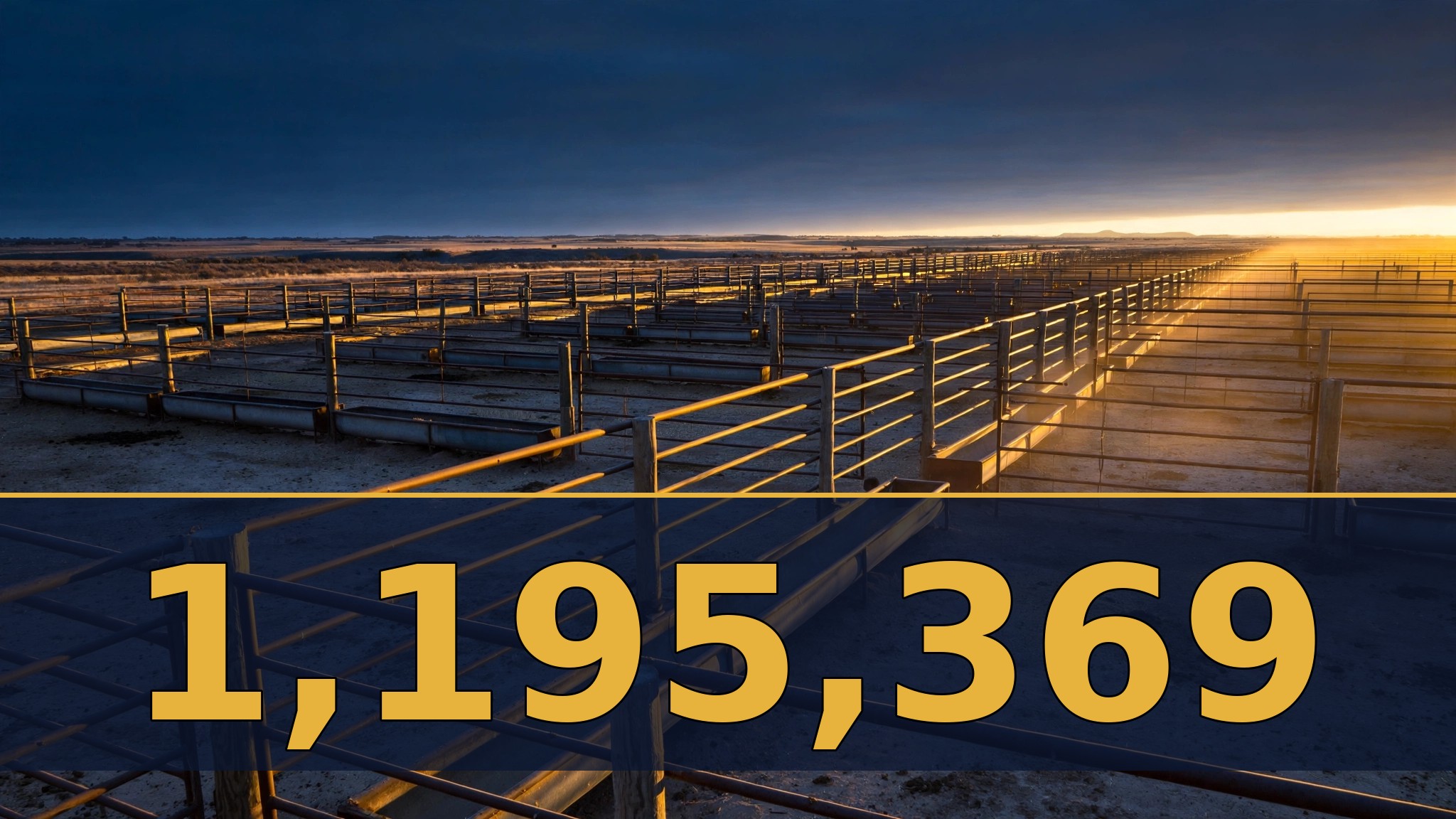
The result. James Talarico (D) defeated Ken Paxton (R) by 5,445,121 votes to 4,249,752 in AP results data — a margin of 1,195,369 votes, or about 56.2 percent to 43.8 percent between the two candidates. AP called the race at 11:03 p.m. ET on November 3; Paxton conceded at about 10:20 p.m. CT (AP).
First since 1988. It is the first Democratic win in a Texas Senate race since 1988, and the first Democratic win in any Texas statewide race since 1994 (AP). Talarico succeeds retiring Sen. John Cornyn.
Cattle is the Texas farm story. Cattle is Texas's No. 1 agricultural commodity, at $15.5 billion a year on 125.5 million acres of ranchland (2022 Census of Agriculture, via AgWeb). The ranch campaign ran through the herd: foreign beef imports, input tariffs, and a screwworm-driven closure of the Mexican cattle border.
Read the margin honestly. No Tier 1 or Tier 2 exit poll or rural-county analysis in the research for this piece isolates the farmer and rancher share of a 12-point statewide margin. The farm and ranch drivers below are documented campaign terrain — the issues both the winning platform and ranch-country reporting centred on — not a measured vote bloc.
The result, in numbers#↑ Contents
AP called the Texas Senate race for James Talarico at 11:03 p.m. ET on Tuesday, November 3 — about 10 p.m. Texas time. Ken Paxton conceded at about 10:20 p.m. CT (AP).
In AP results data with about 97.85 percent of precincts reporting, Talarico had 5,445,121 votes and Paxton 4,249,752. Between the two candidates, that is 56.16 percent to 43.84 percent, a margin of 1,195,369 votes and 12.33 points, calculated from the AP counts.
Election-night partial counts were wider — AP had Talarico near 59 percent with about two-thirds counted — and they are not the margin. The near-final AP count above is the figure to use, and it is still unofficial. No result is certified.
The scale of the win matters for everything that follows. Kansas flipped by about 5 points and Iowa by about 4. Texas flipped by about 12. A margin that size is a statewide affordability and candidate result, in which rural voters were one important bloc among several. This piece covers the farm and ranch part of that result — and labels it as a part, not the whole.
Driver 1: The herd — imports, screwworm, and a border that stopped supplying feedlots#↑ Contents
Texas ranching starts from a large base. Cattle is the state's No. 1 commodity at $15.5 billion a year, produced on 125.5 million acres of ranchland (2022 Census of Agriculture, via AgWeb, October 31, 2026).
Three herd-level facts defined the 2026 ranch year:
Foreign beef imports became a named campaign issue. Talarico's published Rural Investment platform leads its ranch section with opposition to "new foreign beef imports like the Argentina buyout" (Talarico campaign, jamestalarico.com, retrieved November 4, 2026). That is a campaign fact, sourced to the winning candidate's own platform and to the ranchers who campaigned against the imports. The research for this piece found no Tier 1 or Tier 2 figure for the volume, price effect, or ranch-income effect of Argentine beef imports, so this piece does not put a dollar figure on it. The political fact is verified. The economic size is not, and it is not presented here as if it were.
Screwworm reached Texas, and the border closed. New World screwworm reached Texas in 2026, and the resulting halt to Mexican live-cattle imports dried up supply for Texas feedlots. Reuters reported that Lubbock Feeders — a feedlot operating since the Eisenhower era — was on the brink of closure because Mexican cattle had formerly accounted for most of what it raised, and that some Texas yards ran 60 to 70 percent Mexican cattle (Reuters reporting on the screwworm border closure, June 8, 2026). Ports began a phased reopening only in August and September 2026, with Texas ports last in the sequence (USDA announcements). This piece does not publish a Texas case count: the case figures in circulation reached the research through non-Tier 1 carriers summarising USDA dashboard data, and they were not pulled directly from USDA APHIS in time for this draft.
The input bill rose at the same time. That is Driver 2.
Driver 2: Tariffs priced into fuel, fertilizer and feed#↑ Contents
Talarico's stated top agriculture position, in his written answers to AgWeb / Farm Journal's Ag Vote 2026 on October 31, was "repealing the disastrous new tariffs that have driven up the costs of fuel, fertilizer, feed, and everything in between," together with the retaliatory tariffs those measures drew on Texas agricultural exports. In the same answers he listed the rancher's burden as "high diesel prices, expensive farm inputs, pests attacking our livestock, retaliatory tariffs on key agricultural exports, and limited access to labor due to a failed immigration policy."
Those campaign claims map onto national data that is not in dispute:
- Fertilizer, lime and soil conditioners: forecast at $39.6 billion nationally in 2026, up 15.3 percent (USDA Economic Research Service, September 2026 forecast).
- Fuel and oil: forecast up 28.8 percent to about $21.6 billion — the largest percentage cost increase in USDA's forecast.
- On-highway diesel: $6.292 a gallon nationally on November 3 (Energy Information Administration). National average gasoline was $4.12 to $4.14 a gallon on November 3–4, against $3.05 a year earlier (AAA; EIA).
Texas does not get a separate, verified state dollar figure for tariff export losses in this piece, because the research found none at Tier 1 or Tier 2. The national China figure is available and labelled: North Dakota State University's Trade Monitor put lost U.S. agricultural export sales to China at $14.9 billion from March 2025 to February 2026, attributed to retaliatory tariffs, including $1.3 billion in beef. That is an academic study, not a Texas total.
Driver 3: Rural institutions — hospitals, schools, water, and the power bill#↑ Contents
Talarico's rural pitch was institutional as well as commodity-based. His Rural Investment platform promises to:
- Save rural hospitals, through better Medicaid and Medicare reimbursement and workforce recruitment.
- Oppose school vouchers that drain rural public schools.
- Make low-interest loans and grants for rural water systems easier to access, and expand broadband.
The healthcare part of that pitch connects to a national figure: more than 40 percent of rural hospitals operate at a financial loss, and Medicare and Medicaid account for 72 percent of rural hospital discharges (American Hospital Association report, October 13, 2026 — an advocacy source with a direct stake in payment policy, labelled as such). Texas had the highest state count of rural hospitals at immediate risk of closing in the Center for Healthcare Quality and Payment Reform analysis cited in this packet's research — 26 — also a Tier 3 source, presented here as context, not as a government total.
Energy belongs in this section as well as in Driver 2. Diesel is a ranch input; electricity is a household and a town input. Reuters' post-election economic analysis noted that the expansion of artificial intelligence infrastructure is bidding up prices for industrial materials, skilled labour and resources including electricity, and that data centre buildout may be slowed after voters elected Democratic governors who promised stricter oversight of that buildout in states including Texas (Reuters, November 4, 2026). The research for this piece found no data centre moratorium pledge in Talarico's own rural platform, and this piece does not attribute one to him. What is on his record is the cost side: fuel, fertilizer, feed, and the rural systems — hospitals, water, broadband — that energy prices run through.
A note on biography belongs here, because Texas differed from Kansas on it. Neither Talarico nor Paxton has an agricultural background (AgWeb, October 31, 2026). The Texas farm and ranch vote was contested on policy and cost framing, not on who came from farm country.
What Talarico promised ranchers and farmers#↑ Contents
From the campaign's published Rural Investment platform and its AgWeb answers — campaign commitments, recorded here as promises, not as enacted policy:
- Repeal or remove input tariffs on farm equipment and fertilizer, and the produce tariffs that sparked retaliatory tariffs on agricultural exports.
- Oppose new foreign beef imports, including the Argentina imports named in the platform.
- Protect USDA herd-protection programmes against cuts, specifically including the New World screwworm response.
- Simplify H-2A applications while keeping labour standards, and expand agricultural workforce training and farmer-to-farmer programmes.
- Support rural hospitals through recruitment and retention of rural health workers and improved Medicaid and Medicare reimbursement speed and rates.
- Fund rural water and broadband, through easier access to low-interest loans and grants for water systems and restoration of the federal broadband commitment to Texas cited by the campaign.
What delivery requires from here#↑ Contents
Texas's new senator takes his seat in a majority that, on the mechanics set out in this packet's hub piece, cannot enact its farm agenda on its own votes.
- Tariff repeal is a statute. It needs 60 Senate votes and the president's signature, or 67 Senate votes and 290 House votes to override a veto — numbers the new majority does not have. Reuters' post-election analysis made the same point from the other side: Democratic efforts to limit presidential tariff power would be likely to face a presidential veto.
- Protecting USDA programmes, including screwworm response, runs through appropriations — must-pass bills where a Democratic Congress holds real leverage, because the president needs them signed too.
- Rural hospital reimbursement runs through Medicaid and Medicare law. The new majority's stated first items — reinstating the expired Affordable Care Act premium tax credits and reversing the 2025 Medicaid cuts — are directly relevant to rural Texas, and they face the same signature-or-override math.
The test the Texas result sets is therefore specific. Ranchers campaigned on three things that can be checked in 2027: whether foreign beef import policy changes, whether the screwworm response and the cattle border return to normal operation, and whether the diesel, fertilizer and feed bill a Texas operation pays is lower than the 2026 bill. Those are ledgers, not slogans, and they can be measured.
Results are AP race calls and unofficial returns as of November 4, 2026; no result is certified. Campaign positions are cited as campaign positions, not as enacted policy or verified outcomes. Figures the research could not verify to Tier 1 or Tier 2 — including any dollar size for Argentine beef imports and any farmer share of the Texas margin — were not used. This article is for information and education only and is not investment advice.
This article was researched and drafted with assistance from Muse (Meta AI). All figures were checked against the sources listed below.
Sources#
- Associated Press, election results data, Texas Senate Race 46643, and race call, November 3–4, 2026.
- Reuters, reporting on the screwworm outbreak and the Mexican cattle border closure, June 8, 2026 (read via syndication).
- Reuters, post-election economic analysis, including artificial intelligence infrastructure and electricity prices, November 4, 2026.
- USDA Economic Research Service, Farm Sector Income Forecast, September 2026 (released September 3, 2026), via American Farm Bureau Federation Market Intel summary.
- U.S. Energy Information Administration, weekly on-highway diesel price, November 3, 2026; AAA national average gasoline prices, November 4, 2026.
- USDA announcements on the phased reopening of cattle ports, August–September 2026.
- Talarico campaign, Rural Investment platform, jamestalarico.com (retrieved November 4, 2026) — primary source for campaign commitments only.
- Talarico and Paxton written answers, AgWeb / Farm Journal Ag Vote 2026, October 31, 2026, including 2022 Census of Agriculture figures for Texas cattle cited there.
- North Dakota State University Trade Monitor, retrospective assessment of China's 2025/26 retaliatory tariffs (academic study, labelled as such in the text).
- American Hospital Association, rural hospital report, October 13, 2026 (advocacy source, labelled as such in the text).