ELECTIONS · SENATE · OHIO · ENERGY
By Kanchan Sharma Financial Gurkha — Wednesday, November 5, 2026
AI disclosure. This analysis was researched and drafted with the help of Muse (Meta AI). All figures were checked against the cited sources, and the analysis and conclusions are Financial Gurkha's. Financial Gurkha ensures the article is objective and factual.
Key takeaways
The result. Sherrod Brown (D) defeated Sen. Jon Husted (R) by 2,301,042 votes to 2,077,748 on the AP board — 52.6% to 47.4% in the two-candidate count, a margin of about 5.1 points / 223,294 votes, with 98% of precincts reporting. Results are AP calls on unofficial returns, not certified totals.
The structure. This was a special election for the remainder of JD Vance's term. Brown serves through January 3, 2029, and the seat is contested again in 2028.
The comeback. Brown, 73, held this state's Senate seat for 18 years (2007–2025) before losing in 2024. His win showed, in Reuters' wording, that Democrats "could still win statewide in Ohio, where Republicans have become dominant since Trump's political rise in 2016."
The lead attack. Brown pledged to crack down on data-center development and ran ads calling Husted — who had recruited data centers to Ohio as lieutenant governor — "the face of data centers" (WSJ).
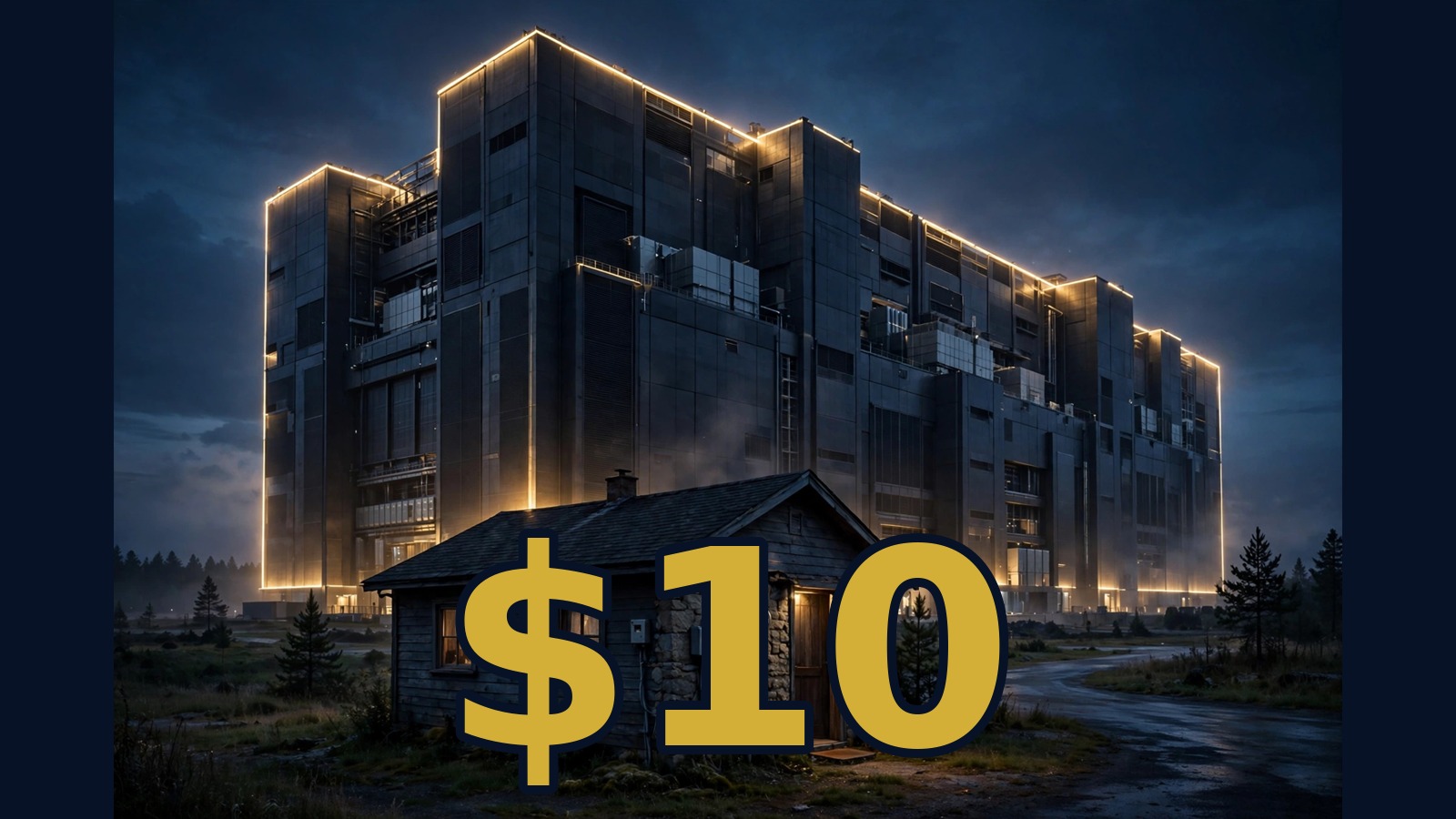
The causation caution. Data-center load growth contributed to significant price increases in the PJM grid region in 2025, and one expert estimate puts the data-center-attributable increase at at least $10 a month on bills in western Maryland and Ohio from mid-2025. But the same fact-check record is explicit: most of the observed electricity price increases of the past few years are not due to data centers (FactCheck.org, reviewing Lawrence Berkeley National Lab / Brattle research).
An appointed incumbent, a returning one#↑ Contents
Ohio's race paired two kinds of incumbency.
Jon Husted was appointed to the seat in January 2025 by Governor Mike DeWine, after JD Vance vacated it to become vice president. Husted was the state's former lieutenant governor — the role in which, as AP reports, he had recruited data centers to Ohio. President Trump endorsed him and campaigned with him in the closing weeks.
Sherrod Brown needed no introduction to Ohio voters. He represented the state in the Senate for three terms, from 2007 to 2025, until his 2024 loss to Bernie Moreno ended an 18-year tenure (WSJ). At 73, he ran again — this time for the remaining two years of Vance's term.
AP Voter Poll data describes the familiarity gap in the result: about half of Ohio voters viewed Brown favourably, against about 4 in 10 for Husted; about 7 in 10 voters under 30 backed Brown, and Brown won about two-thirds of moderate voters. Most Ohio voters saw Husted as too supportive of the president, while fewer than half called Brown too extreme.
The data-center attack, as it was made#↑ Contents
The Wall Street Journal's account is direct: "During his campaign, Brown pledged to crack down on data center development, which has sparked anger among many Ohio voters. The Brown campaign ran ads calling Husted 'the face of data centers' and attacking him for supporting data-center expansion while he was lieutenant governor."
AP adds the rest of the Brown attack — his support for artificial-intelligence data centers, ties Brown alleged to a statehouse bribery scandal, and campaign donations from Les Wexner. Those last two items are reported here as what they are in the source: Brown campaign attacks, not findings against Husted.
Brown's own closing formulation, per AP: "I do not work for the utility companies. I do not work for data centers. I do not work for Wall Street. I work for you, I work for Ohio." His specific pledge was to "require the data centers pay the full cost of their electricity, not you."
Late in the race the two parties converged part-way on that principle: Husted sponsored a Ratepayer Protection Act intended to make large users cover their own grid costs, while Democrats argued the measure lacked enforceable protections. The argument in October was no longer whether large loads should pay more of the grid cost they create. It was whose version voters believed.
What data centers did — and did not — do to the bill#↑ Contents
This is the section where the campaign version and the measured version separate, and a data-first publication has to print both.
What the research supports. FactCheck.org, reviewing a July report by Lawrence Berkeley National Laboratory and the Brattle Group, found that data-center load growth contributed to "significant" price increases in the PJM Interconnection — the grid region that includes Ohio — in 2025. PJM's independent market monitor attributed part of the rise to data centers. An expert estimate cited in the same review puts the data-center-attributable increase at at least $10 a month on customer bills in western Maryland and Ohio, from mid-2025.
What the research does not support. The same review states that "most of the observed price increases in the past few years are not due to data centers." Nationally, retail electricity prices rose 29% in nominal terms — 3% after inflation — between 2019 and 2025. That longer increase has multiple causes that predate the current data-center build-out.
Brown's stronger campaign language — presenting data centers as the sole cause of household bill increases — is not supported by that record, and this article does not repeat it as fact.
The politically relevant point and the analytically relevant point are different, and both are true: data centers are a real, measured, single-digit-to-low-double-digit-dollar contributor to recent PJM bills, attached to a visible building in a voter's own county, recruited by the appointed incumbent himself. No other line on the electricity bill comes with a face. That is a complete explanation of why the attack worked, without overstating what it proved.
The cost-of-living backdrop#↑ Contents
Ohio did not vote on data centers in isolation. The WSJ records that "Brown also benefited from a national wave of voter dissatisfaction with the economy," and Ohio voters faced higher prices for groceries, gasoline, health insurance and electricity through the campaign. Reuters' Ohio reporting put the national figure in its story: 78% of Americans blame the president for the high cost of living.
That is the same backdrop measured in every flip in this packet — prices first, with a state-specific transmission mechanism. In Maine the mechanism was heating oil. In South Carolina it was an appointed nominee's experience. In Ohio it was the power bill, and the building on the edge of town that voters could connect it to.
What the result does and does not show#↑ Contents
Brown's term runs only through January 3, 2029, and he must defend the seat again in 2028 — a presidential-cycle electorate, on a record that will by then include two years of votes in a Democratic Senate. Husted's loss is the loss of an appointed incumbent in a cost-of-living wave; it is not, on this data, a measurement of Ohio's long-run partisan direction. Reuters' narrower claim is the defensible one: Democrats showed they can still win statewide in Ohio. Whether they keep doing so is a 2028 question.
Figures circulating for this race's total cost and for Ohio's average bill increase were available to this newsroom only through secondary aggregators at the time of writing. They are omitted here until the originals can be checked — the result, the pledge, and the $10-a-month measured estimate do not need them.
Results are AP race calls and unofficial returns as of Wednesday, November 5, 2026; no result is certified. This report is for information and education only and is not investment advice.
Sources: Reuters, "Democrat Sherrod Brown wins back US Senate seat in Ohio," November 4, 2026 (special-election structure, term through January 3, 2029, candidates, 78% cost-of-living figure); Associated Press election results board, Ohio Senate special election, November 2026 (vote counts); Wall Street Journal live coverage, November 2026 (data-center pledge, "face of data centers" ads, 18-year tenure, national-wave framing); Associated Press reporting via syndication, November 2026 (Brown attacks and quote, favourability, under-30 and moderate vote shares — AP content on a non-Tier 1 host); FactCheck.org, "Data Centers and Electricity Prices: It's Not as Simple as Voters May Think," October 2026, reviewing Lawrence Berkeley National Laboratory / Brattle research (PJM contribution, at-least-$10/month estimate, "most increases are not due to data centers" caution, 2019–2025 national price figures).