MARKETS · ELECTIONS · ENERGY · TRADE
By Kanchan Sharma Financial Gurkha — Wednesday, November 5, 2026
Key takeaways
The result. Democrat Troy Jackson ousted Republican Sen. Susan Collins. An AP board snapshot (74.22% of precincts, an estimated 91.83% of the vote) put it at Jackson 364,841 — Collins 314,487, a margin of 50,354 votes, about 7.4 points on the two-candidate count. Collins conceded after midnight. Results are unofficial and the count was incomplete (AP).
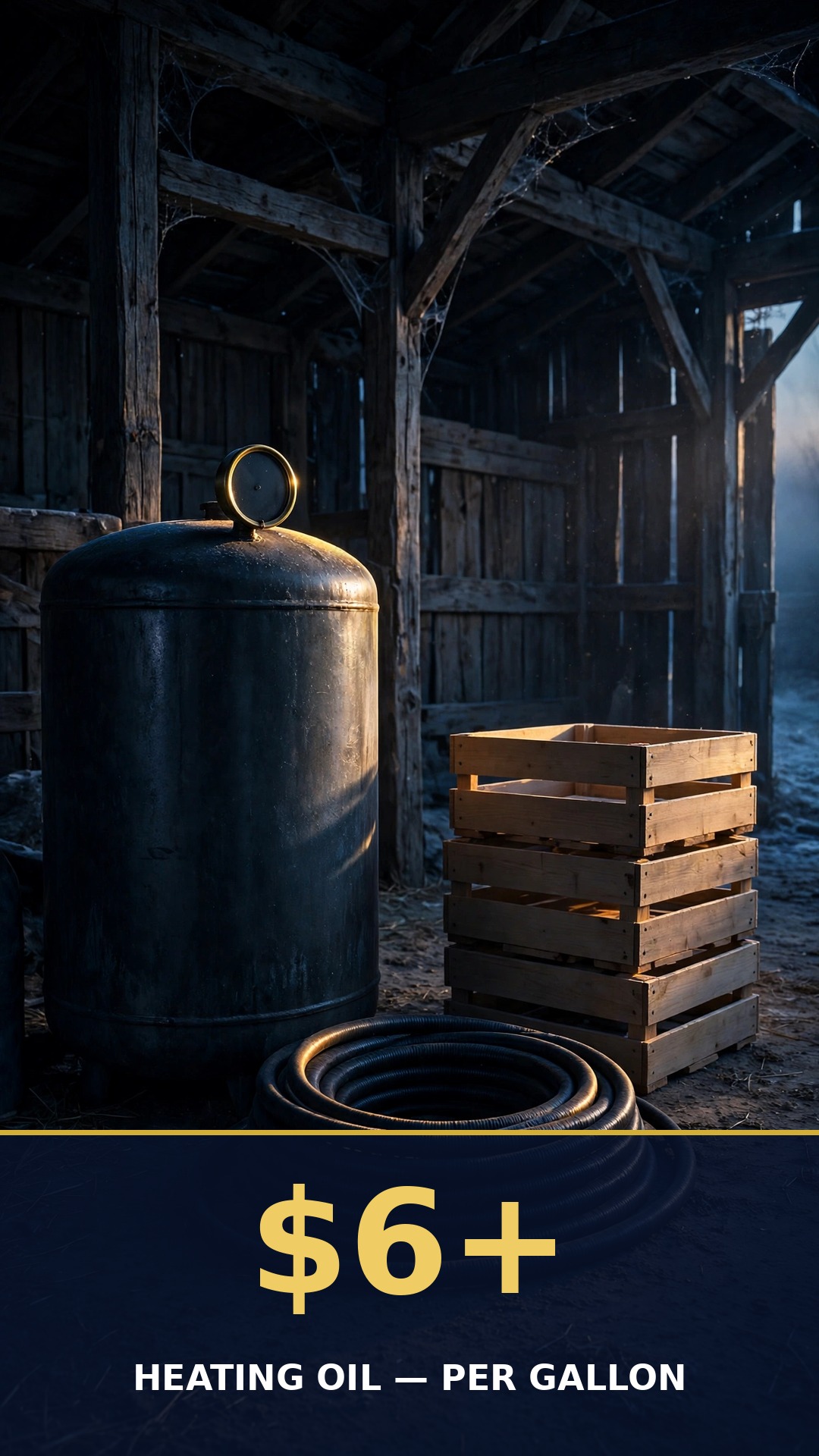
The lead driver. Heating oil climbed above $6 a gallon nationally, up from about $3.50 a year ago (U.S. Energy Information Administration data, via Reuters). 54% of Maine homes use heating oil (Reuters). No other flipped state had a household cost that direct, that seasonal, and that close to election day.
The waiver. On July 20, 2026, a presidential proclamation imposed additional 50% duties on certain Canadian products. On October 23, a further proclamation exempted nine categories Collins's office described as crucial to Maine agriculture. The changes took effect October 30 — four days before the election. The same order replaced the removed products with other tariffed goods, including certain valves, carpets and waste products (White House fact sheet, October 23, 2026).
The honest limit. No Maine-specific exit-poll question on the tariff waiver was found in Tier 1 or Tier 2 sources. This article does not claim voters were polled on it. Why the waiver did not change the outcome is analysis, labelled as analysis, built from Reuters' stated drivers — fuel prices and the wider Canada trade war — and from the calendar.
The result, in numbers#↑ Contents
Collins was first elected in 1996, was seeking a sixth term at 73, and had, in Reuters' words, "repeatedly survived as a moderate Republican in a state that has not backed her party for president since 1988." She entered election day as the only Republican member of Congress from New England, in a race rated a toss-up.
Jackson, 58, is a fifth-generation logger from Allagash and a former president of the Maine Senate (Reuters). His path to the ballot was unusual, and it is part of the result: he first ran for governor and finished third in the June Democratic primary; Democrats then selected him in July as their Senate nominee, replacing Graham Platner, who had dropped out. That gave Jackson a short general-election campaign against a five-term incumbent — and he won it by roughly seven points on the count available Wednesday morning.
His election-night line, reported by AP, was addressed to household budgets rather than to Washington: "For every family doing everything they can and wondering when somebody is going to do something for them… you're going to have someone who is fighting for you in Washington, D.C."
Driver one: the price of staying warm#↑ Contents
Reuters stated the mechanism in one sentence: "The Iran war pushed up fuel and home heating oil prices — an especially salient issue in a largely rural state known for harsh winters."
The numbers behind that sentence, from Reuters' October 24 reporting of Energy Information Administration data:
- Heating oil: above $6 a gallon, up from about $3.50 a gallon a year ago
- Diesel — a fuel chemically similar to heating oil: a record above $6.50 a gallon, pushing up the price of groceries and staples delivered by truck
- Exposure: 54% of Maine homes use heating oil as their primary heating fuel
- The combined exposure for fishermen and farmers — diesel for the boat or tractor, oil for the house — was described to Reuters by Mark Brewer, chair of political science at the University of Maine, as a "double whammy"
This was not an abstract cost-of-living index. It was a delivery truck, a tank in the basement, and a bill that arrives before winter does, in the last weeks of a Senate campaign.
Collins responded on the same line, and the response is on the record: she noted she had voted several times to end the war after initially supporting it, she pushed for the release of $38 million for Maine from the $4 billion federal LIHEAP heating-assistance programme, and she urged tapping the Northeast heating-oil reserve, which the Energy Department did release from (Reuters, October 24, 2026). An October Reuters / Ipsos poll found nearly 80% of Americans blamed the President's policies for higher costs, including energy (Reuters). The incumbent had a fuel record to run on. The fuel price was still above $6 on election day.
Driver two: the Canada trade war, whole#↑ Contents
Reuters' second stated driver was broader than any single exemption: "Trump's trade war with Canada weighed on tourism, lobstering, logging and other pillars of Maine's economy."
Maine's border is not a policy abstraction. Canadian visitors, Canadian processing and supply chains for lobster, and Canadian markets and inputs for logging and farming run through the state's economy year-round. A tariff dispute with Canada is, in Maine, a local economic event — which is exactly why a partial, late exemption became a test of whether targeted relief could offset a general trade war in voters' accounting.
The waiver, in full: a timeline from the primary sources#↑ Contents
This is the sequence the campaign argued about. Each step is dated from the White House proclamation and fact sheet, AP reporting, or Reuters.
July 20, 2026 — the duties are imposed. Proclamation 11048 imposed additional 50% ad valorem duties under Section 338 of the Tariff Act of 1930 on certain Canadian products, citing Canada's motor-vehicle tariff scheme. Per the October proclamation's own recital, those duties took effect August 19, 2026.
September 8, 2026 — the scope is modified once. Proclamation 11065 first modified which products the duties covered.
October 6, 2026 — the debate line. At the first televised debate, Collins pointed to exemptions she said she had won, including road salt. Jackson's reply became the campaign's most repeated sentence: "We can't eat road salt." The line worked because it separated two categories voters were already separating — relief for a municipal input, and relief for a household budget. (Jackson also charged at the debate that Collins had backed the President "96% of the time." Collins disputed the methodology, and this article treats that figure as a campaign claim, not a verified statistic.)
October 23, 2026 — the exemption proclamation. The President signed a proclamation further modifying the scope of the Canadian duties. Collins announced it first, in a post on X, saying she had pressed U.S. Trade Representative Jamieson Greer and Commerce Secretary Howard Lutnick about "the toll tariffs are taking on Maine families, businesses, farmers, and growers" (AP reporting). Two presentation facts are in the AP record and are worth stating plainly: the White House statement did not mention Collins, and Collins's statement did not mention the President.
What was exempted. The White House fact sheet (October 23, 2026) removed plywood sheets, some paper products, certain machinery and refrigeration equipment, and certain packing crates and boxes from the 50% Section 338 scope. Collins's office listed nine categories described as crucial to Maine's agricultural industries — corrugated paper, plastic boxes and packing bags, refrigeration equipment, several kinds of machinery, and seaweed and algae products — used by blueberry, potato, apple and seaweed producers. The practical example in AP's reporting: Maine wild-blueberry growers import specialised Canadian harvesting boxes for which there is no easy domestic substitute.
What was added in the same order. This is the half of the proclamation that decided how it read. In the fact sheet's own framing, the removed products were "replaced… with certain valves, carpets, waste products, and others." It was a re-scoping — some Canadian goods out of the duty list, other Canadian goods into it — not a net repeal of the duties. The wider Canada trade war Reuters cited — tourism, lobstering, logging — remained in place in election week.
October 30, 2026, 12:01 a.m. ET — the changes take effect. Four days before the November 3 election. The duties applied in addition to Section 232 duties.
The response, on the record. Jackson: "Trump's trade wars have made life harder and more expensive for Mainers. Susan Collins enabled this chaos, voted to confirm the people behind it, and now wants credit for bringing a cup of water to put out the fire." He added: "Mainers needed help long before Susan Collins needed saving." (AP reporting, October 23, 2026.)
Why it did not save her — analysis, labelled as such#↑ Contents
Financial Gurkha does not have a Maine exit poll on the waiver, because none was found in Tier 1 or Tier 2 sources. What follows is inference from the sourced record above, and it is presented as inference.
- Timing and scale. The relief landed four days before voting, on inputs — boxes, crates, machinery, refrigeration. The price voters were paying that week was heating oil above $6 a gallon. Packaging relief for growers is real money to growers; it is not a number a household sees before it votes.
- A swap is not a repeal. Because the same proclamation tariffed other Canadian goods, the announcement could not be presented — by either campaign — as the trade war ending. The sectors Reuters named as weighed down by that war were still weighed down on November 3.
- The framing was already set. "We can't eat road salt" was spoken on October 6, seventeen days before the proclamation. The October 23 announcement arrived inside a frame Jackson had already built, and his "cup of water" reply was issued the same day. Collins was asking for credit inside her opponent's sentence.
- The bigger number won. Set the two figures a Maine household could compare side by side: nine exempted input categories, effective October 30 — against a heating fuel up from about $3.50 to above $6, in a state where 54% of homes burn it. Elections decided on household costs are usually decided by the household number.
What Jackson campaigned on, beyond the waiver#↑ Contents
A blue-collar logger identity; universal healthcare and other populist economic policies, with the support of Sen. Bernie Sanders; opposition to the Canada trade war; and a sustained linkage of Collins to the President and to the Iran-war fuel costs behind the heating-oil price (Reuters, November 4, 2026).
What happens in January#↑ Contents
Maine's flip is one of seven that give Democrats the Senate. From January 3, 2027, Democrats chair the committees and control the confirmation calendar. What that cannot do is equally specific to this state's story: tariff schedules set by presidential proclamation under Section 338 are executive action. A Congress that wants to reclaim tariff authority must pass a law — 60 Senate votes to break a filibuster, then a signature, or 67 Senate and 290 House votes to override a veto. Reuters' post-election analysis expects Democratic efforts to limit presidential tariff power to face a veto. Oversight hearings on tariff policy, by contrast, need no signature at all, and they begin with the gavels.
The durable fact of this race is not the waiver. It is that a five-term incumbent secured a real, documented exemption for her state's farmers eleven days before an election — and lost by about seven points to a candidate whose whole case was a fuel bill. That is the size of the cost-of-living vote in 2026, measured in the state where it was most literal.
Results are AP race calls and unofficial returns as of November 4–5, 2026; no result is certified, and the Maine count was incomplete in the AP snapshot cited. This article is for information and education only and is not investment advice.
Sources: Associated Press election results (Maine) and AP reporting on the October 23, 2026 proclamation and on the campaign, via AP wire reporting; Reuters, "Democrat Troy Jackson ousts Republican Senator Susan Collins in Maine," November 4, 2026; Reuters, reporting on heating-oil prices and Senate races, October 24, 2026 (U.S. Energy Information Administration data); White House, Proclamation of October 23, 2026, "Further Modifying the Scope of Products of Canada Subject to the Additional Duties…" (reciting Proclamation 11048 of July 20, 2026 and Proclamation 11065 of September 8, 2026) and accompanying White House fact sheet, October 23, 2026; Sen. Susan Collins's office statement on the nine exempted categories, via AP reporting.
AI disclosure. This article was researched and drafted with the help of Muse (Meta AI). Figures are taken from the Tier 1 and Tier 2 sources cited above; analysis sections are labelled as analysis, no exit-poll claim about the tariff waiver is made because none was found in those sources, and figures that could not be verified against a primary source were left out. The analysis and conclusions are Financial Gurkha's.