MARKETS · ELECTIONS · U.S. POLITICAL ECONOMY
By Kanchan Sharma Financial Gurkha — Wednesday, November 5, 2026
Key takeaways
The result. Adam Hamilton (D) defeated Sen. Roger Marshall (R). AP results data, with 100 percent of precincts reporting, showed Hamilton with 556,415 votes to Marshall's 503,240 — 52.51 percent to 47.49 percent between the two candidates, a margin of 53,175 votes. All-candidate reporting, including the Libertarian on the ballot, put the shares at about 51 percent to 46 percent, with 3 percent for the Libertarian. This piece uses the AP counts and labels the basis wherever a percentage appears.
First since 1932. Hamilton is the first Democrat to win a Kansas U.S. Senate election since George McGill in 1932 — a 94-year gap (AP).
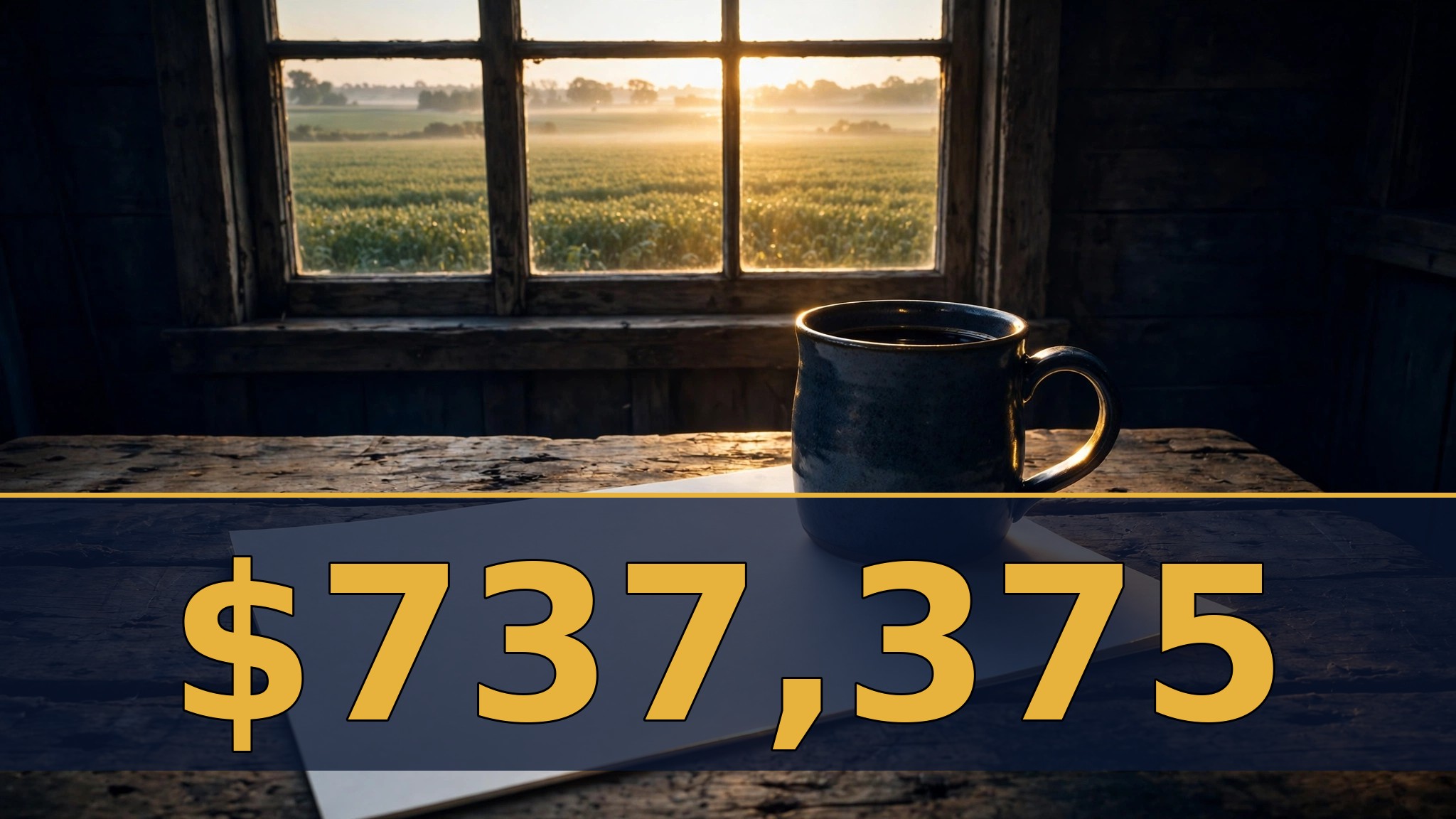
The ledger. The Preisser family, farming 6,500 acres near Sylvia, Kansas, told CBS News it cost them $737,375 more to operate in 2026 than in 2025 — including $514,625 more for fertilizer and $187,000 more for diesel — while revenue fell by $325,000 (CBS News, October 29, 2026).
The national number underneath it. Fertilizer, lime and soil conditioners are forecast up 15.3 percent nationally in 2026, and fuel and oil up 28.8 percent (USDA Economic Research Service, September 2026 forecast).
The promise at the centre. Larry Preisser, who started the family farm, told CBS the broken promise behind his first-ever Democratic vote was the Farm Bill: "Two years [later], we got no farm bill, nothing." The 2018 Farm Bill's third extension expired on September 30, 2026 (Congressional Research Service).
The result, in numbers#↑ Contents
AP called the Kansas Senate race for Adam Hamilton on November 3, 2026.
AP results data (Race 17585, 100 percent of precincts reporting, about 98.5 percent of the estimated vote) recorded:
- Hamilton: 556,415 votes
- Marshall: 503,240 votes
Between those two candidates, that is 52.51 percent to 47.49 percent — a margin of 53,175 votes, or 5.02 points, calculated from the AP counts. All-candidate reporting differs because a Libertarian, David Graham, was also on the ballot, putting the full-field shares at about 51 percent for Hamilton, 46 percent for Marshall and 3 percent for Graham. Both bases describe the same result. Certified margins await the Kansas canvass, which AP's calendar lists as starting November 9. An election-night partial count that showed a wider Hamilton lead is not used here as a margin.
Hamilton is the first Democrat to win a Kansas Senate election since George McGill in 1932 (AP). That 94-year gap was the longest Senate drought for either party in any state in this cycle, and it ended in a farm state, in a farm-cost year.
The ledger: one family, itemised on paper#↑ Contents
The strongest evidence in the Kansas race is not a poll. It is a piece of paper.
CBS News (Katrina Kaufman, October 29, 2026) visited the Preisser family near Sylvia, Kansas — a 6,500-acre corn, cotton, soybean and wheat operation — and the family itemised its 2026 cost increase for the cameras:
- Total additional cost to operate in 2026 versus 2025: $737,375, including:
- Fertilizer: +$514,625
- Diesel: +$187,000 — a jump the family ties to the Iran war
- Parts: +$10,000 — which the family links to steel tariffs
- Revenue: down $325,000 from 2025 to 2026, with drought cutting yields by 20 percent, commodity prices low, and, in CBS's summary of the family's position, trade wars shrinking agricultural exports.
The human balance sheet behind those numbers, as CBS reported it: Jeff Preisser, 50, said he had refinanced all of the operation's equity — "There is no more equity in anything… if it doesn't work this year, we're done." His father Larry, who started the farm, sold land that had been in the family for 140 years to pay bills. The family called the president's late-campaign $8 billion temporary fuel-relief programme, announced at a rally outside Wichita in the week before the election, a "Band-Aid" (CBS News).
Larry Preisser planned to vote Democratic for the first time in his life, for Hamilton. His reason, in his own words to CBS, was not a slogan. It was a delivery failure: Republicans in power had promised a Farm Bill, and, he said, "Two years [later], we got no farm bill, nothing."
Kansas context from the same CBS report, citing USDA's National Agricultural Statistics Service: Kansas lost 700 farms from 2024 to 2025. Nationally, Chapter 12 farm bankruptcy filings were 315 in calendar 2025, up 46 percent from 2024 (American Farm Bureau Federation analysis of U.S. Courts data).
The counterpoint — Kansas farmers were split, not unanimous#↑ Contents
Any honest Kansas piece has to carry the second farmer in the same CBS story.
An hour from the Preissers, soybean farmer Mick Roush reported the same cost pressure — and stayed with Marshall, calling Hamilton "too liberal" (CBS News, October 29, 2026).
That split is the finding. The cost squeeze in Kansas was broadly shared. The political conclusion drawn from it was not. Hamilton won the argument with enough farm households to flip a seat that had been Republican since 1932; he did not win it with all of them, and the Preissers should be read as the clearest documented example of the voters who moved — not as a claim that Kansas farmers moved as a bloc.
Driver 1: Fertilizer#↑ Contents
Fertilizer is the largest single line in the Preisser ledger — $514,625 of additional cost on one operation — and it is also the clearest national line in USDA's forecast.
USDA's Economic Research Service, in its September 2026 Farm Sector Income Forecast, put fertilizer, lime and soil conditioners at $39.6 billion nationally in 2026, up $5.3 billion, or 15.3 percent, from 2025. Total production expenses are forecast at $492.8 billion, up 4.5 percent, and net farm income at $158.4 billion, down 2.6 percent in nominal terms and down 5.5 percent after inflation — with direct government payments forecast at $47.4 billion, up 69.8 percent, supporting the headline income figure while market income falls (USDA ERS, via American Farm Bureau Federation Market Intel).
Hamilton's campaign argument, in his own words in his affordability agenda, was that tariff and war policy "land[s] on Kansas farmers… in the form of higher prices on everything from equipment and fertilizer to groceries."
His proposed supply-side answers were specific, and they are recorded here as campaign commitments:
- Rebuild the Canada relationship for potash.
- Establish a U.S. presence in Morocco to facilitate phosphate imports — he cited young farmers near Ottawa, Kansas facing doubled phosphate prices.
- Expand domestic fertilizer production.
Driver 2: Diesel, at harvest#↑ Contents
Diesel is the second Preisser line: $187,000 in additional cost, tied by the family to the Iran war.
Nationally, USDA forecast fuel and oil costs up $4.8 billion, or 28.8 percent, to about $21.6 billion in 2026 — the largest percentage increase of any major cost category in the forecast (USDA ERS, September 2026). The Energy Information Administration put on-highway diesel at $6.292 a gallon on November 3, and AAA put the national average gasoline price at $4.12 to $4.14 a gallon on November 3–4, against $3.05 a year earlier.
The administration's $8 billion temporary fuel-relief programme arrived in the final week of the campaign. The Preissers' one-word assessment of it — "Band-Aid" — is part of the Kansas record because CBS reported it from the family itself. It is their characterisation, not this piece's.
Driver 3: No Farm Bill#↑ Contents
The legislative fact underneath the Kansas result is a date.
The 2018 Farm Bill's third one-year extension expired on September 30, 2026. The Congressional Research Service records that USDA's Farm Service Agency paused new Conservation Reserve Program approvals for lack of statutory authority, that commodity and dairy support authority runs to December 31, 2026, and that permanent law from the 1930s and 1940s is the backstop from January 1, 2027 (CRS, Farm Bills: Major Legislative Actions, updated September 23, 2026).
For a Kansas operation deciding what to plant, borrow and insure, that is not an abstraction. Crop insurance and the farm safety net are the instruments a family uses to survive a year like the Preissers' 2026. A missing Farm Bill is a missing renewal date for those instruments.
CBS also reported a third pressure in the southwest Kansas meatpacking and ranching counties: recent immigration raids that, the Preissers argued, left ranchers short-staffed during harvest, alongside their view that Marshall had not stood up for farmers against the Iran war and the tariffs. That is reported here as the family's argument, as CBS presented it. This piece does not use county-level swing figures for those counties, because the county reporting available in the research was from a local outlet and had not been cross-checked against Kansas Secretary of State county returns.
What Hamilton promised Kansas farmers#↑ Contents
From Hamilton's campaign affordability and agriculture material and his written answers to AgWeb / Farm Journal's Ag Vote 2026 (October 28, 2026) — campaign commitments, recorded as promises:
- Pass a Farm Bill, and keep crop insurance and the farm safety net strong enough to reflect the cost squeeze.
- Constrain new tariffs: support the bipartisan Trade Review Act — sponsored by Sen. Chuck Grassley (R-IA) and Sen. Maria Cantwell (D-WA), and also backed by Sen. Jerry Moran (R-KS) — which would require congressional approval for new tariffs, with the cost to American families published before they take effect.
- Repair input trade: the Canada potash relationship and the Morocco phosphate route set out under Driver 1, plus durable, binding deals opening export markets and addressing non-tariff barriers in Europe and Mexico.
- Fully fund animal-disease response, including the vaccine bank and laboratories.
- Reform farm labour: year-round H-2A visas and a pathway to legal status for farm and ranch workers with clear records.
- Support year-round E15.
- On rural healthcare costs, vote to restore the health-insurance tax credits that expired at the end of 2025 and reverse Medicaid cuts.
Hamilton also made a positioning point that belongs in the record, because it describes how he won a farm state without claiming to be a farmer. In his AgWeb answers he said: "I am not an agricultural expert… what I am an expert at is listening." The Preisser ledger is what listening produced as a campaign document: a family's own numbers, repeated back as policy.
What delivery requires — and the calendar problem#↑ Contents
Kansas exposes the timing problem in this packet more sharply than any other state.
The Farm Bill promise that moved Larry Preisser must first be settled by somebody else. The remaining window for the expired bill — a federal funding deadline on December 11 and the December 31 permanent-law cliff — falls in the lame-duck session of the outgoing Republican Congress, before the new Democratic majority is seated on January 3, 2027. If a Farm Bill or an extension is signed in that window, Hamilton inherits implementing it. If it is not, he inherits the cliff.
After January 3, the mechanics are the same as in every flipped state:
- A new Farm Bill needs 60 Senate votes and the president's signature, or a veto override at 67 Senate votes and 290 House votes — numbers the new majority does not have on its own.
- The Trade Review Act faces the same math. Its bipartisan sponsorship — a Republican from Iowa and a Republican from Kansas among its backers — is the reason it is the most plausible tariff item in the new Congress: it does not need to be a party-line bill.
- Crop insurance improvements ride inside the Farm Bill. There is no separate crop-insurance deliverable apart from that bill.
So the Kansas test for 2027 is the one Larry Preisser set in October, in plain terms: a Farm Bill passed, and a fertilizer and diesel bill lower than the ledger his family showed CBS. Both are measurable. Neither requires interpretation. This series will check them against the same numbers next year.
Results are AP race calls and unofficial returns as of November 4, 2026; no result is certified, and the certified Kansas margin awaits the state canvass beginning November 9. Campaign positions are cited as campaign positions, not as enacted policy or verified outcomes. This article is for information and education only and is not investment advice.
This article was researched and drafted with assistance from Muse (Meta AI). All figures were checked against the sources listed below; figures the research could not verify to Tier 1 or Tier 2 — including county-level swings and race spending totals — were not used.
Sources#
- Associated Press, election results data, Kansas Senate Race 17585, and race call, November 3–4, 2026.
- CBS News (Katrina Kaufman), "In tight Kansas Senate race, struggling rural voters are split," October 29, 2026 — Preisser family ledger, quotations, Kansas farm count and fuel-relief characterisation, and the Mick Roush counterpoint.
- USDA Economic Research Service, Farm Sector Income Forecast, September 2026 (released September 3, 2026), via American Farm Bureau Federation Market Intel summary — fertilizer, fuel and oil, total expenses, net farm income and government payments.
- U.S. Energy Information Administration, weekly on-highway diesel price, November 3, 2026; AAA national average gasoline prices, November 4, 2026.
- Congressional Research Service, Farm Bills: Major Legislative Actions, 1965–2026, updated September 23, 2026 — Farm Bill extension expiry and authority dates.
- USDA National Agricultural Statistics Service, Kansas farm count, via CBS News, October 29, 2026.
- American Farm Bureau Federation, Chapter 12 bankruptcy analysis of U.S. Courts data, February 2026.
- Hamilton campaign, affordability and agriculture material (via Ballotpedia's reproduction of campaign material, August 2026), and Hamilton's written answers in AgWeb / Farm Journal Ag Vote 2026, October 28, 2026 — primary sources for campaign commitments and quotations only.